
Noticed a bubble sticking out from the side of your car tyre? A tyre bulge deserves immediate attention, even when the tyre still holds air and your car seems to drive normally.
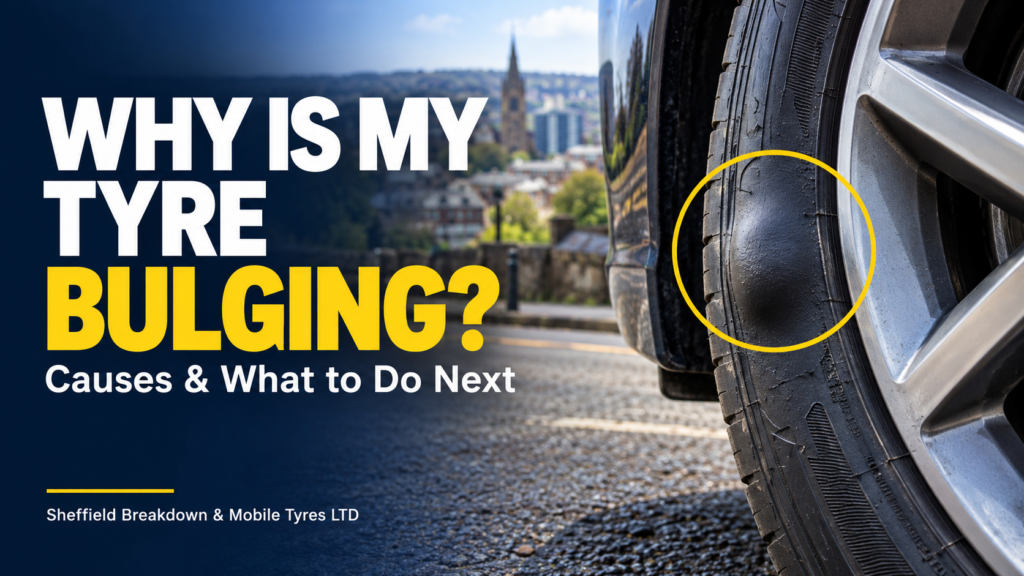
An outward bulge usually means the tyre’s internal supporting cords have been damaged. Potholes and kerb impacts are common causes. The weakened area cannot support pressure properly, making continued driving dangerous.
For Sheffield drivers, the practical next step is to stop somewhere safe and arrange professional help. This guide explains how to recognise a tyre sidewall bulge, what may have caused it, and how to organise a suitable replacement without driving to a garage.
What Is a Tyre Bulge?
A tyre bulge is a localised lump or bubble pushing outward from the tyre’s surface, most commonly its sidewall. This is the section between the wheel rim and the tread.
Inside a tyre, reinforcing cords support its shape. When these cords break, air can enter the layers and push the rubber outward. The visible bubble is therefore a sign of damage beneath the surface.
Do not judge its seriousness by its size. A small bubble is still a reason to take the tyre out of service. Photographing the damage may help a technician understand your concern, but a photograph cannot confirm the tyre’s internal condition.
What Causes a Tyre Sidewall Bulge?
1. Hitting a Pothole
Pothole tyre damage can happen when a wheel strikes a sharp road edge. The impact may trap the sidewall against the rim, damaging the reinforcing structure.
You might notice the bubble after parking rather than immediately after the impact. If you remember a hard knock, mention it when arranging an inspection.
Check whether the wheel also appears damaged, but avoid assuming that an undamaged-looking rim means the tyre is safe. The impact can affect components differently, and internal tyre damage may not be obvious.
2. Striking or Mounting a Kerb
Kerb impacts are another common cause. This can happen while parking, turning tightly or accidentally mounting the pavement.
A scrape on the rubber is different from an outward bubble. However, either deserves attention when the damage looks pronounced or you are unsure of its depth.
Tell the fitter which wheel hit the kerb and whether the car developed any vibration afterwards. This information helps them understand the circumstances, although the tyre still needs direct examination.
3. Incorrect Inflation and Operating Conditions
Tyre pressure, vehicle load and previous damage can affect tyre condition. Driving with insufficient pressure can damage the structure, while excessive pressure can increase susceptibility to impact damage.
Use the vehicle manufacturer’s recommended pressures, including any different setting for a fully loaded vehicle. These are normally listed in the handbook or on a vehicle label.
Correcting pressure does not fix a tyre that already has a bulge. Inflation is part of routine prevention; it cannot restore broken reinforcing cords.
4. An Unclear Damage History
Sometimes you cannot identify a particular pothole or kerb strike. Another driver may have used the car, or the damage may have become noticeable later.
Do not assume an unexplained bubble is harmless. Equally, do not automatically blame a manufacturing defect without an inspection.
If the tyre was recently purchased, retain the invoice and ask the supplier about their assessment process. Any warranty decision depends on the findings and the relevant terms.
Is a Bulging Tyre Dangerous?
Yes. A bulging tyre has a weakened structure and can suffer sudden air loss. Its appearance is enough to justify urgent attention.
Normal pressure readings do not prove that it is safe. Pressure tells you how much air is inside; it does not show whether the cords are intact.
Good tread depth is also irrelevant to this particular damage. A tyre can have plenty of tread remaining and still need replacement because of a sidewall bulge.
There is no reliable way to predict how many miles it will last. Avoid treating a short journey, a lower speed or a small bubble as reassurance.
What to Do When You Notice a Tyre Bulge
Stop Somewhere Safe
If you discover the bulge before leaving home, do not begin your journey. If you notice a problem while travelling, bring the vehicle to a safe stopping place without abrupt manoeuvres.
Your surroundings matter. Do not stand beside moving traffic to examine the tyre or attempt a wheel change in an exposed location. If your position creates immediate danger, seek appropriate emergency assistance.
Avoid Driving to a Garage
Arranging help at your location avoids an unnecessary journey on the damaged tyre.
Our mobile tyre fitting in Sheffield service provides tyre replacement at homes, workplaces and suitable roadside locations. Explain that you have a visible sidewall bulge when you contact the team.
Provide the Details Needed for a Replacement
Have the following information ready:
- Your location and postcode, where available.
- Your vehicle registration.
- The tyre size printed on the sidewall.
- Which tyre is damaged.
- Whether the wheel appears damaged.
- Whether the vehicle is somewhere safe and accessible.
Only read the tyre markings if you can do so safely. Otherwise, tell the team that you need help identifying the specification.
Ask About Availability and the Full Price
For urgent assistance, contact our 24/7 mobile tyre service.
Ask the team to confirm coverage, suitable tyre availability, the expected arrival time and the total charge. This helps you make an informed decision without relying on assumptions about stock or callout costs.
Can a Tyre Bulge Be Repaired?
A structural tyre bulge requires replacement. A puncture plug, patch or sealant cannot rebuild damaged internal cords.
An ordinary tread puncture is a different problem. Some punctures can be repaired after the tyre has been removed and inspected, depending on their location, size and the tyre’s condition.
This distinction matters when requesting help: describe the bubble rather than simply saying you have a puncture. It helps the technician prepare for a replacement instead of assuming a repair may be possible.
Do not try to burst, flatten or glue the bubble. Manipulating the damaged area does not make the tyre usable.
A Bulge or an Indentation: What Is the Difference?
An outward bubble should not be confused with a slight inward indentation.
Some radial tyres have small inward irregularities where reinforcing layers overlap. These can be a normal feature of construction.
An outward lump is a different concern. If you cannot confidently distinguish the two, ask a tyre professional to inspect it.
Check the visible outer sidewalls during routine maintenance, but remember that damage can occur on the inner side too. Do not crawl beneath an unsupported vehicle to look for it. A professional can examine areas that are difficult to see safely.
Choosing a Replacement Tyre
The replacement must be suitable for your vehicle. Tyre size alone is not the whole specification: load rating, speed rating and any vehicle-specific requirements also matter.
Give the fitter the existing markings and ask them to check the recommended specification. Mention whether the vehicle uses run-flat tyres or has particular manufacturer requirements.
Ask whether replacing one tyre is appropriate or whether the opposite tyre’s condition also needs consideration. This is especially relevant where the vehicle manufacturer specifies limits on tread differences.
A clear quote should explain the tyre being supplied and what the service includes. Price comparisons are more useful when they compare equivalent specifications and complete fitting costs.
How to Reduce the Risk of Future Tyre Damage
You cannot prevent every road hazard, but regular checks help you notice problems earlier.
Maintain the recommended tyre pressures and adjust them as instructed for your load. Avoid using the maximum pressure printed on the tyre as a substitute for the vehicle’s guidance.
Give kerbs room when parking and approach poor road surfaces cautiously. Avoid sudden swerving when a pothole appears; consider surrounding traffic and road conditions.
Look for cuts, cracks, bubbles and unusual wear during routine checks. Arrange an inspection after a significant impact, particularly if you notice vibration or a change in handling.
Keep a record of tyre purchases and maintenance. This makes it easier to discuss previous work and replacement specifications with your fitter.
Frequently Asked Questions
Can I drive with a small tyre bulge?
Do not continue driving on a tyre with a structural bulge. A small bubble still indicates damage, and its size does not establish a safe driving distance.
Will releasing some air remove the bubble?
Changing pressure cannot repair broken cords. Do not deflate the tyre in an attempt to hide the bulge or make it suitable for driving.
Can a new tyre develop a bulge?
Yes. A relatively new tyre can suffer impact damage. Age and remaining tread do not rule out a serious problem beneath the rubber.
Do I need replacement if the tyre is not leaking?
Yes, a confirmed structural bulge requires replacement even if the tyre currently maintains pressure. A visible leak is not necessary for the damage to be serious.
Can a mobile fitter replace the tyre at home?
Mobile replacement may be possible where the vehicle is safely accessible and a suitable tyre is available. Confirm the location and specification when booking.
Arrange Tyre Assistance in Sheffield
A tyre bulge needs action before your next journey. Leave the vehicle somewhere safe, note the tyre details where possible and arrange professional replacement.
Sheffield Breakdown & Mobile Tyres LTD offers mobile fitting and emergency tyre assistance. Call 07438 959294 to discuss your location, tyre specification, availability and quote. Explain that the tyre has a sidewall bubble so the team can prepare appropriately.