
Choosing the right tyres is an important part of keeping your vehicle safe and comfortable on the road. One question drivers often ask is: which tyre is best, tube or tubeless?
Both tube and tubeless tyres perform the same basic job, but they are designed differently. Traditional tube tyres use a separate inner tube to hold air, while tubeless tyres are designed to hold air between the tyre and wheel rim without a separate inner tube.
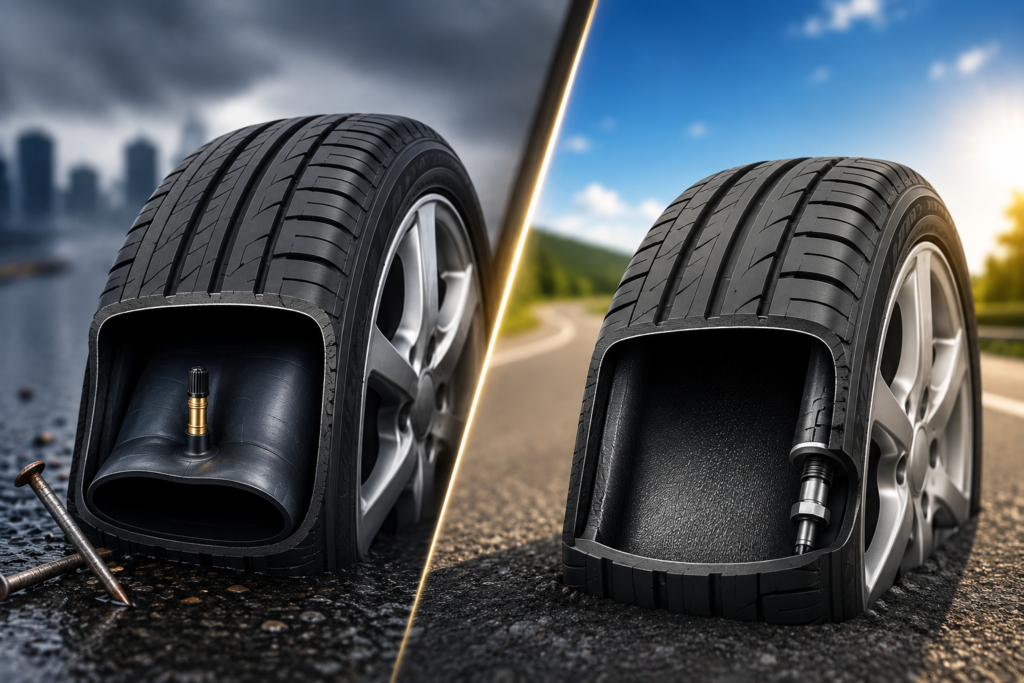
For most modern cars, tubeless tyres have become the standard choice because of their convenience, puncture behaviour and compatibility with modern wheels. However, understanding the differences can help you make a more informed decision.
In this guide, we compare tube vs tubeless tyres, explain their advantages and disadvantages, and discuss what to do if you experience a puncture or tyre failure.
If you are already dealing with a flat or damaged tyre in Sheffield, our Mobile Tyre Fitting service can bring professional tyre assistance directly to your location.
What Is a Tube Tyre?
A tube tyre contains a separate inflatable inner tube positioned between the tyre and wheel.
The inner tube holds the compressed air that supports the tyre and vehicle.
If the tube is punctured, air can escape and the tyre may lose pressure quickly.
Tube tyres were widely used on older vehicles and are still found on certain motorcycles, bicycles, agricultural vehicles and specialist wheels.
However, most modern passenger cars now use tubeless tyres.
What Is a Tubeless Tyre?
A tubeless tyre does not use a separate inner tube.
Instead, the tyre and wheel rim form an airtight system. The inside of the tyre is designed to retain air while the tyre bead creates a seal against the rim.
A tubeless valve is fitted directly into the wheel.
This design removes the need for an inner tube and provides several practical advantages for everyday drivers.
Tubeless tyres are now widely used on modern cars, SUVs and many vans.
Tube vs Tubeless Tyres: What Is the Main Difference?
The biggest difference is how each tyre retains air.
A tube tyre uses a separate inner tube.
A tubeless tyre holds air directly between the tyre and wheel rim.
This difference affects puncture behaviour, maintenance, weight, heat generation and repair options.
Here is a simple comparison:
| Feature | Tube Tyre | Tubeless Tyre |
|---|---|---|
| Inner Tube | Required | Not required |
| Modern Car Usage | Less common | Very common |
| Puncture Air Loss | Can be rapid | Often more gradual |
| Weight | Generally heavier | Generally lighter |
| Heat From Tube Friction | Possible | Reduced |
| Maintenance | More components | Simpler design |
| Puncture Repair | Tube may require removal | Some tread punctures may be repairable |
| Modern Vehicle Compatibility | Limited | Widely used |
Which Tyre Is Best: Tube or Tubeless?
For most modern passenger vehicles, tubeless tyres are generally the better and more practical option, provided the vehicle and wheels are designed for them.
They eliminate the separate inner tube, can reduce certain types of friction-related heat and may lose air more gradually when penetrated by a small object.
However, this does not mean every punctured tubeless tyre is safe to drive on.
Any tyre that has suffered damage should be inspected properly.
The right tyre should always match the vehicle manufacturer’s specifications, wheel design, correct tyre size, load rating and speed rating.
If you are unsure which tyre your vehicle requires, a professional tyre technician can help identify the correct option.
Advantages of Tubeless Tyres
There are several reasons why tubeless tyres have become common on modern vehicles.
1. No Separate Inner Tube
The most obvious advantage is that there is no inner tube.
This removes the possibility of problems specifically associated with the tube becoming pinched, damaged or rubbing inside the tyre.
2. Punctures May Lose Air More Slowly
When a small object such as a nail enters the tread area of a tubeless tyre, it may remain lodged in the tyre temporarily.
As a result, pressure loss can sometimes be more gradual than with certain tube punctures.
This can give a driver more opportunity to notice the pressure loss.
However, you should never assume that a punctured tyre is safe simply because it is losing pressure slowly.
3. Less Friction Between Tyre and Tube
A tube tyre contains two separate components that can generate friction and heat.
Tubeless tyres eliminate the inner tube, reducing this particular source of friction.
4. Lower Overall Weight
Removing the inner tube can make the tyre assembly somewhat lighter.
While the difference may be relatively small for everyday driving, reduced rotating weight can be beneficial.
5. Convenient Puncture Assessment and Repair
Certain punctures in the central tread area of a tubeless tyre may be professionally repairable if they meet applicable safety requirements.
The tyre still needs to be inspected before a repair decision is made.
Drivers in Sheffield experiencing a puncture can use our Tyre Puncture Repair service for professional assistance.
Disadvantages of Tubeless Tyres
Tubeless tyres also have some limitations.
Rim Condition Matters
A tubeless tyre relies on an effective seal between the tyre bead and wheel rim.
A badly damaged, corroded or unsuitable rim can cause air leakage.
Professional Equipment May Be Required
Removing and fitting modern tyres requires appropriate tyre-changing equipment and experience.
Attempting improper tyre installation can damage the tyre, wheel or valve.
Not Every Puncture Can Be Repaired
A common misconception is that every tubeless tyre puncture can be repaired.
This is not true.
Damage to the sidewall, excessive tyre wear, significant structural damage or certain puncture locations may make tyre replacement necessary.
Advantages of Tube Tyres
Although less common on modern cars, tube tyres still have applications.
Suitable for Certain Wheel Designs
Some older or specialist wheels are designed to operate with inner tubes.
Useful in Specific Applications
Motorcycles with certain spoked wheels, classic vehicles and some off-road or agricultural applications may still use tubes.
Established Technology
Tube tyres have been used successfully for many years and remain appropriate when the vehicle or wheel specifically requires them.
Disadvantages of Tube Tyres
For modern passenger vehicles, tube tyres generally offer fewer practical advantages than tubeless systems.
Faster Pressure Loss Can Occur
When an inner tube is punctured or damaged, air may escape quickly.
Sudden pressure loss can make vehicle control more difficult.
Additional Heat
Friction between the tyre and inner tube can generate additional heat.
More Components
Because there is an additional inner tube, there is another component that can become damaged or require attention.
Tube Damage During Installation
Incorrect installation can pinch or damage the tube, potentially causing future pressure loss.
Are Tubeless Tyres Safer Than Tube Tyres?
For modern vehicles designed for them, tubeless tyres offer several safety-related advantages, particularly in how some punctures behave.
A small tread puncture may cause gradual pressure loss rather than immediate deflation.
However, no tyre is immune to sudden failure.
A severe impact, sidewall damage, large puncture, incorrect pressure or badly worn tyre can still result in rapid pressure loss.
Tyre safety therefore depends on much more than whether the tyre has a tube.
Drivers should regularly inspect tyre condition, maintain correct pressures and replace tyres when they become unsafe.
What Happens When a Tubeless Tyre Gets Punctured?
The outcome depends on the type and location of the puncture.
If a small nail or screw enters the main tread area, the object may temporarily restrict how quickly air escapes.
You may notice:
- A tyre pressure warning
- Gradual loss of pressure
- Changes in vehicle handling
- Visible tyre deflation
- An object embedded in the tread
Do not simply remove an embedded object at the roadside unless you know what you are doing. Removing it can increase the rate of air loss.
Instead, arrange a professional tyre inspection.
If the vehicle cannot be driven safely, our Roadside Assistance service can help drivers experiencing unexpected vehicle problems.
Can a Tubeless Tyre Be Repaired?
Some tubeless tyre punctures can be repaired, but not every damaged tyre is suitable.
A professional will consider factors such as:
- Position of the puncture
- Diameter of the damage
- Remaining tread depth
- Internal tyre condition
- Previous repairs
- Sidewall condition
- Evidence of driving while underinflated
Sidewall damage generally requires particularly careful assessment and often means the tyre cannot be safely repaired.
The correct decision should be based on a proper inspection rather than simply plugging any visible hole.
When Should You Replace a Tyre Instead of Repairing It?
Replacement may be necessary when a tyre is too badly damaged for a safe repair.
Examples can include:
- Significant sidewall damage
- Bulges or structural deformation
- Exposed internal cords
- Excessive tread wear
- Major cuts
- Damage caused by driving on a flat tyre
- Multiple unsuitable previous repairs
- Damage outside an appropriate repairable area
If you are stranded with a tyre that cannot be repaired, mobile tyre fitting allows a replacement tyre to be brought directly to your location where available.
This can avoid the need to drive an unsafe vehicle to a garage.
What Is Mobile Tyre Fitting?
Mobile tyre fitting is a professional tyre service delivered at the customer’s location.
Instead of taking your car to a traditional tyre garage, a mobile technician travels to you with specialist tyre fitting equipment.
Depending on availability and the problem, mobile tyre services can help with:
- Flat tyres
- Punctures
- Damaged tyres
- Emergency tyre replacement
- Tyre fitting at home
- Tyre fitting at work
- Roadside tyre problems
This is particularly useful when your tyre is too badly damaged to continue driving safely.
Mobile Tyre Fitting for Tubeless Tyres
Most modern vehicles use tubeless tyres, so mobile tyre fitting services are commonly equipped to deal with modern tyre systems.
The technician can inspect the damaged tyre and determine the appropriate course of action.
If replacement is required, the existing tyre can be removed and a suitable replacement fitted at your location, subject to tyre availability and the vehicle’s requirements.
Sheffield drivers can contact Sheffield Breakdown & Mobile Tyres LTD for 24/7 mobile tyre assistance.
Our Mobile Tyre Fitting in Sheffield service is designed to help when tyre problems happen at home, work or on the road.
What Should You Do If Your Tyre Goes Flat?
If you notice a flat tyre while driving, avoid continuing your journey unnecessarily.
Driving on a flat tyre can damage the tyre, wheel and potentially other vehicle components.
Where safe to do so:
- Reduce speed gradually.
- Move to a safe location.
- Switch on hazard lights where appropriate.
- Avoid standing in a dangerous position near moving traffic.
- Contact professional roadside or tyre assistance.
If the vehicle has become stranded because of a tyre or mechanical problem, professional Breakdown Recovery can help when the vehicle cannot continue its journey.
How Do You Know Whether Your Car Uses Tubeless Tyres?
Most modern passenger cars use tubeless tyres.
However, if you are uncertain, you can check the tyre markings, vehicle handbook or manufacturer specifications.
A tyre professional can also confirm the correct tyre type and specification for your vehicle.
Do not convert between tube and tubeless configurations without ensuring that the tyre, wheel and vehicle are suitable for the setup.
How to Make Your Tyres Last Longer
Whether your vehicle uses tube or tubeless tyres, proper maintenance can improve tyre life and reduce the risk of unexpected problems.
Maintain Correct Tyre Pressure
Underinflation can increase heat, fuel consumption and tyre wear.
Overinflation can also affect handling and tyre wear.
Check tyre pressures according to your vehicle manufacturer’s recommendations.
Check Tread Regularly
Inspect tread depth and wear patterns.
Uneven wear can sometimes indicate alignment, suspension or pressure problems.
Look for Visible Damage
Check tyres for:
- Cuts
- Cracks
- Bulges
- Embedded nails
- Uneven wear
- Sidewall damage
Avoid Driving on a Flat Tyre
Continuing to drive after significant pressure loss can turn potentially manageable damage into a tyre that requires replacement.
Get Problems Inspected Early
If a tyre repeatedly loses pressure, do not simply keep inflating it.
Have the tyre, valve and wheel inspected to identify the cause.
Tube vs Tubeless Tyres: Final Verdict
So, which tyre is best: tube or tubeless?
For most modern cars designed to use them, tubeless tyres are the preferred option.
They eliminate the separate inner tube, reduce tube-related friction and can provide more manageable pressure loss in some puncture situations.
However, tyre selection should always follow the specifications recommended for your vehicle.
More importantly, whichever tyre type you use, proper pressure, sufficient tread and good overall tyre condition are essential for safe driving.
If you experience a flat, puncture or damaged tyre in Sheffield, do not risk driving an unsafe vehicle.
Sheffield Breakdown & Mobile Tyres LTD provides 24/7 Mobile Tyre Fitting and Roadside Assistance across Sheffield and surrounding areas.
Contact our team for professional tyre assistance directly at your location.
Frequently Asked Questions
1. Which tyre is better, tube or tubeless?
For most modern passenger cars designed for tubeless systems, tubeless tyres are generally the preferred option. They do not require an inner tube and offer several practical benefits for modern driving.
2. Do tubeless tyres get punctures?
Yes. Tubeless tyres can still be punctured by nails, screws, road debris and other sharp objects. Some punctures may cause slower pressure loss, but every damaged tyre should be properly inspected.
3. Can a tubeless tyre be repaired?
Certain punctures may be professionally repairable depending on their location, size and the overall condition of the tyre. Sidewall or structural damage may require tyre replacement.
4. Can a mobile tyre fitter replace a tubeless tyre?
Yes. A professional mobile tyre fitting service can replace suitable tubeless tyres at your home, workplace or roadside location, subject to tyre availability and safe working conditions.
5. Is mobile tyre fitting available in Sheffield?
Yes. Sheffield Breakdown & Mobile Tyres LTD provides mobile tyre fitting and roadside assistance across Sheffield and surrounding areas. Customers can contact the team for tyre assistance at their location.