
Your tyres are the only part of your vehicle that stays in direct contact with the road, so keeping them in good condition is essential. Incorrect tyre pressure or worn tyre tread can affect braking, handling, fuel economy and overall safety. The good news is that you do not need to be a mechanic to carry out basic tyre checks at home.
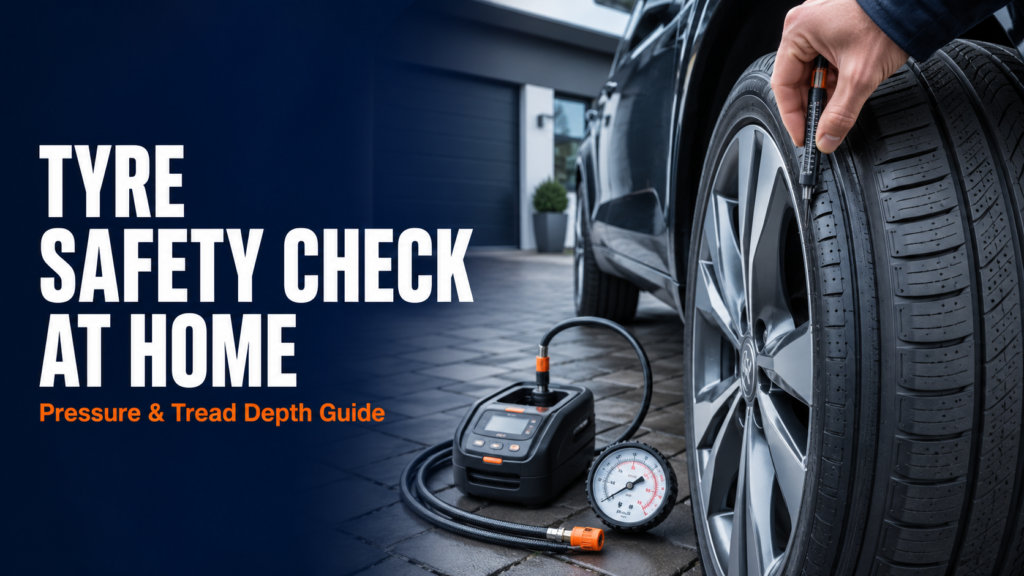
A quick tyre pressure and tread depth check can help you spot problems before they turn into a puncture, tyre blowout or roadside breakdown. Whether you drive daily around Sheffield, travel long distances or use your vehicle only occasionally, checking your tyres regularly is one of the simplest ways to stay safe on the road.
This guide explains how to check tyre pressure and tread depth at home, what the legal requirements are in the UK, and when it is time to call a professional.
Why Checking Your Tyres Matters
Tyres naturally lose a small amount of air over time. Changes in weather, long journeys, potholes, kerb damage and small punctures can also affect tyre pressure. When your tyres are underinflated, they create more resistance on the road, which can increase fuel consumption and cause uneven tyre wear.
Overinflated tyres can be just as risky. They may reduce grip, make the ride less comfortable and cause the centre of the tyre to wear more quickly.
Tread depth is equally important. Tyre tread helps your vehicle grip the road and move water away from the tyre surface. When the tread is too low, especially in rain, the risk of losing control or aquaplaning increases.
Regular tyre checks can help you:
- Improve road safety and braking performance
- Extend the life of your tyres
- Reduce uneven tyre wear
- Improve fuel efficiency
- Avoid MOT issues and possible fines
- Catch punctures or damage early
If you notice damage, a flat tyre or a sudden drop in pressure, our mobile puncture repair service can come to your location in Sheffield.
How Often Should You Check Tyre Pressure?
Ideally, tyre pressure should be checked at least once a month and before any long journey. It is also sensible to check your tyres after hitting a deep pothole, driving over debris or noticing that the car feels different while driving.
Always check pressure when tyres are cold. This means checking them before you drive, or after the vehicle has been parked for at least a few hours. Driving heats up the tyres and increases the pressure reading, so checking them immediately after a journey may not give an accurate result.
What You Need to Check Tyre Pressure at Home
Checking tyre pressure is simple. You will need:
- A tyre pressure gauge, either digital or manual
- Access to an air pump or compressor
- Your vehicle’s recommended tyre pressure information
- A tyre valve cap tool if needed
Most petrol stations have air machines, but a portable tyre inflator is useful for home checks. The recommended pressure for your vehicle can usually be found inside the driver’s door frame, in the fuel filler flap or in the vehicle handbook.
Do not use the pressure number written on the tyre sidewall as your target pressure. That number is usually the tyre’s maximum pressure, not the pressure recommended for your specific car.
Step-by-Step: How to Check Tyre Pressure
Start by parking your vehicle on level ground and making sure the tyres are cold.
First, remove the valve cap from one tyre. Keep it somewhere safe so it does not get lost. Place the tyre pressure gauge firmly onto the valve stem. You may hear a brief hiss of air as you attach it, but this should stop once the gauge is correctly fitted.
The gauge will show the pressure in PSI or bar. Compare this reading with your vehicle manufacturer’s recommended tyre pressure. Many vehicles have different pressure recommendations for front and rear tyres, so check each tyre individually.
If the tyre pressure is too low, add air using an air compressor or portable inflator. Add air in small amounts and recheck the pressure until it reaches the correct level. If you overinflate the tyre, release a little air by pressing the small pin inside the valve with the back of the gauge or a suitable tool.
Once the pressure is correct, replace the valve cap securely. Repeat the same process for all four tyres and do not forget the spare wheel if your vehicle has one.
If one tyre repeatedly loses pressure, there may be a slow puncture, valve issue or wheel damage. In that case, it is safer to arrange a professional inspection rather than continue topping it up.
How to Check Tyre Tread Depth at Home
In the UK, the legal minimum tyre tread depth for cars is 1.6mm across the central three-quarters of the tyre, around its full circumference. However, waiting until your tyres reach the legal limit is not recommended.
Many tyre professionals suggest replacing tyres when the tread reaches around 3mm, particularly before winter or frequent wet-weather driving. This gives you better grip and helps water clear from the tyre more effectively.
The easiest way to check tyre tread depth at home is with a tread depth gauge. Simply place the gauge into the main grooves of the tyre and take the reading. Check several points across the tyre because wear may not be even.
You can also use the built-in tread wear indicators. These are small raised bars inside the main grooves of the tyre. When the tyre tread becomes level with these bars, the tyre is at or near the legal limit and should be replaced.
A quick alternative is the 20p coin test. Put a 20p coin into the main tread groove. If you can see the outer band of the coin, the tread may be too low and should be checked professionally. This is a useful quick check, but a proper tread gauge is more accurate.
Look for Uneven Wear and Visible Damage
While checking pressure and tread depth, inspect the full tyre surface. Look for cuts, cracks, bulges, nails, screws or objects stuck in the tread. Sidewall damage and bulges are particularly serious because they can lead to a sudden tyre failure.
Uneven wear can also indicate another issue. For example, excessive wear in the middle of the tyre may suggest overinflation, while worn edges may indicate underinflation. Wear on only one side could point to wheel alignment or suspension problems.
Never ignore a tyre that looks damaged. If you are unsure whether your tyre is safe to drive on, contact our team through the contact page for fast advice and assistance.
When Should You Replace Your Tyres?
You should consider tyre replacement when:
- Tread depth is close to or below 3mm
- The tyre is below the 1.6mm legal limit
- There are cracks, bulges or sidewall damage
- A puncture cannot be repaired safely
- The tyre is wearing unevenly
- The car vibrates, pulls to one side or loses grip
- You have repeated pressure loss
Driving with unsafe tyres can put you, your passengers and other road users at risk. It can also lead to an MOT failure and legal penalties.
Get Mobile Tyre Help in Sheffield
Checking tyre pressure and tread depth at home only takes a few minutes, but it can make a major difference to your safety. If you find low tread, a puncture, a damaged tyre or need a replacement, you do not have to risk driving to a garage.
Sheffield Breakdown & Mobile Tyres LTD provides reliable mobile tyre fitting at your home, workplace or roadside location. We can help with tyre replacement, puncture repair and emergency tyre assistance across Sheffield and nearby areas.
For urgent vehicle problems beyond tyres, you can also explore our roadside assistance service. Regular checks help prevent problems, but professional support is always available when you need to get safely back on the road.