
When was the last time you properly inspected your car’s tyres? For most drivers in the UK, tyre maintenance is an afterthought—something only considered when the MOT is due or when an unexpected blowout leaves them stranded on the side of the road. However, driving on damaged or worn tyres is not only incredibly dangerous but also illegal.
In the UK, the weather can change from a sunny afternoon to a torrential downpour in a matter of minutes. Whether you are navigating the steep hills of Sheffield or cruising down the M1, your tyres are the only point of contact between your vehicle and the road. If they fail, your brakes, steering, and suspension cannot perform effectively.
Understanding the condition of your tyres is a critical part of vehicle maintenance. Ignoring the warning signs can lead to severe consequences, including reduced grip, increased stopping distances, a higher risk of aquaplaning, and even fatal accidents. Furthermore, if you are caught driving with tyres that do not meet the legal requirements, you could face hefty fines of up to £2,500 and three penalty points per tyre.
To help you stay safe and legally compliant on the roads, we have compiled a comprehensive guide detailing the 5 warning signs your car tyres need replacing immediately. If you spot any of these issues, it is time to seek professional Tyre Replacement services before it is too late.
1. Tread Depth Below the Legal UK Limit
The most critical indicator of a tyre’s health is its tread depth. The tread is the grooved rubber on the outer surface of the tyre that comes into direct contact with the road. Its primary function is to disperse water from beneath the tyre, preventing aquaplaning and ensuring adequate grip, especially in wet and icy conditions.
The UK Legal Requirement
In the UK, the legal minimum tyre tread depth is 1.6mm across the central three-quarters of the tyre and around its entire circumference. However, many road safety experts and tyre manufacturers strongly recommend replacing your tyres when the tread drops below 3mm. Research shows that a tyre’s braking performance deteriorates significantly once the tread wears below this point.
How to Check Your Tread Depth: The 20p Test
You don’t need special tools to check your tread depth; a simple 20p coin will do the trick. This is a widely recognised method in the UK:
-
Insert a 20p coin into the main tread grooves of your tyre.
-
Ensure you check at least three different locations around the tyre’s circumference.
-
If the outer band of the 20p coin is completely hidden by the rubber, your tread is above the legal limit.
-
If you can see the outer band of the coin, your tyre is illegal and extremely dangerous. You need immediate Mobile Tyre Fitting to replace it.
Driving with bald tyres compromises your safety and the safety of other road users. If your tread is low, do not delay—get your tyres checked by a professional immediately.
2. Visible Cracks, Cuts, and Bulges in the Sidewall
The tread is not the only part of the tyre that requires regular inspection. The sidewall—the smooth, vertical side of the tyre—is equally important. Over time, tyres are subjected to significant stress from driving over potholes, scraping against curbs, and general wear and tear.
Cracks (Weather Checking)
As rubber ages, it naturally degrades. Exposure to UV light, fluctuating temperatures, and general environmental factors can cause the rubber to dry out, leading to fine cracks on the sidewall, often referred to as ‘weather checking’ or ‘crazing’. While small, superficial cracks might not be an immediate cause for panic, deep cracks indicate that the structural integrity of the tyre is failing. If the tyre structure is compromised, it is at a high risk of blowing out at high speeds.
Cuts and Tears
If you notice any significant cuts or tears in the sidewall that expose the internal cords or fabric of the tyre, it is completely unsafe to drive on. This kind of damage often occurs from hitting sharp objects or severe curb impacts. A tyre with a deep cut cannot be repaired and must be replaced immediately.
Bulges and Blisters
A bulge or blister on the sidewall is perhaps the most dangerous warning sign. This indicates that the rigid internal framework of the tyre has been damaged, allowing air pressure to push the flexible outer rubber outwards. A bulging tyre is essentially a ticking time bomb and can result in a catastrophic blowout at any moment. If you spot a bulge, do not attempt to drive the vehicle. Instead, call a reliable Breakdown Recovery service or arrange for a mobile tyre fitter to come to your location.
3. Uneven Tyre Wear
When you inspect your tyres, take a close look at the wear patterns. A healthy tyre on a well-maintained vehicle should wear down relatively evenly across its entire surface. If you notice that your tyres are wearing unevenly, it is a clear sign that something is wrong with your vehicle’s setup, or that the tyres themselves have been mistreated.
Types of Uneven Wear:
-
Excessive Wear on the Edges: This usually indicates that the tyre has been consistently under-inflated. Driving on under-inflated tyres increases rolling resistance, reduces fuel efficiency, and causes the tyre to run hotter, increasing the risk of failure.
-
Excessive Wear in the Centre: This is a classic sign of over-inflation. When a tyre is over-inflated, only the central part of the tread makes contact with the road, leading to rapid wear in that specific area and reducing overall grip.
-
Wear on One Side (Inner or Outer Edge): If one shoulder of the tyre is wearing significantly faster than the other, it almost certainly points to a wheel alignment (tracking) issue. Hitting a pothole or curbing your wheel can easily knock your alignment out of specification.
-
Cupping or Scalloping: This refers to erratic, scoop-like dips in the tread. This is often caused by worn suspension components, such as faulty shock absorbers, which cause the tyre to bounce excessively on the road.
If your tyres are suffering from severe uneven wear, especially if the tread depth on any part of the tyre falls below the 1.6mm legal limit, they must be replaced. Furthermore, it is crucial to address the underlying cause—such as getting your wheel alignment corrected—otherwise, your new tyres will suffer the exact same fate.
4. Frequent Loss of Tyre Pressure
It is completely normal for tyres to lose a very small amount of pressure over time (perhaps 1-2 PSI per month) due to natural permeation. The changing weather in the UK can also cause minor fluctuations; pressure tends to drop in the cold winter months and expand during the summer.
However, if you find yourself constantly reaching for the air pump at the petrol station, or if your car’s Tyre Pressure Monitoring System (TPMS) is persistently lighting up, you have a problem.
Causes of Pressure Loss:
-
A Slow Puncture: You may have picked up a small nail, screw, or piece of debris that is causing a slow leak. Sometimes, these objects embed themselves so deeply that they are difficult to spot.
-
Valve Issues: The tyre valve is responsible for keeping the air in. Over time, the valve core can fail, or the rubber stem can perish and crack, allowing air to escape.
-
Corroded Alloys: If your vehicle has older alloy wheels, corrosion can build up on the inner rim where the tyre seals against the wheel (the bead). This corrosion prevents an airtight seal, leading to slow leaks.
If you suspect a slow leak, do not ignore it. Driving on an under-inflated tyre generates excessive heat, which can permanently damage the internal structure of the tyre, turning a simple repair into an expensive replacement. If the tyre is constantly deflating, contact a professional for a thorough inspection. In some cases, a safe Mobile Puncture Repair can save the tyre, but if the damage is on the sidewall or the tyre has been driven flat, replacement is the only safe option.
5. Excessive Vibration While Driving
Every driver knows the familiar feel of their car. A certain amount of vibration is to be expected, especially when driving on poorly maintained roads or rough surfaces. However, if you begin to feel excessive, unfamiliar vibrations or a ‘wobble’ through the steering wheel, the floorboards, or your seat, it is a warning sign that should not be ignored.
What Causes the Vibration?
-
Unbalanced Wheels: When you have new tyres fitted, the technician will attach small weights to the rim to ensure the wheel and tyre assembly rotates smoothly. If one of these weights falls off, or if the tyre wears unevenly, the wheel becomes unbalanced, causing a noticeable vibration, usually at higher speeds (e.g., motorway driving).
-
Damaged Tyres: A tyre that has an internal defect, such as a separated belt, can cause severe vibrations. This is a very dangerous situation.
-
Suspension or Steering Issues: Worn shock absorbers, ball joints, or tie rods can also cause vibrations that mimic tyre problems.
Regardless of the cause, excessive vibration means something is wrong. Continued driving will only accelerate tyre wear and potentially damage your vehicle’s suspension components. If the vibration is severe, pull over safely. If you suspect the tyre is compromised, it is always safer to call for a Flat Tyre Call Out rather than risk driving further.
Don’t Compromise on Safety
Your tyres are your first line of defence on the road. Regularly inspecting them for the five warning signs mentioned above—low tread, visible damage, uneven wear, pressure loss, and excessive vibration—can save you from hefty fines, expensive vehicle repairs, and, most importantly, life-threatening accidents.
Make it a habit to perform a quick visual inspection of your tyres every couple of weeks, and check your tyre pressures at least once a month. If you are unsure about the condition of your tyres, it is always best to seek expert advice.
Need Urgent Tyre Assistance in Sheffield?
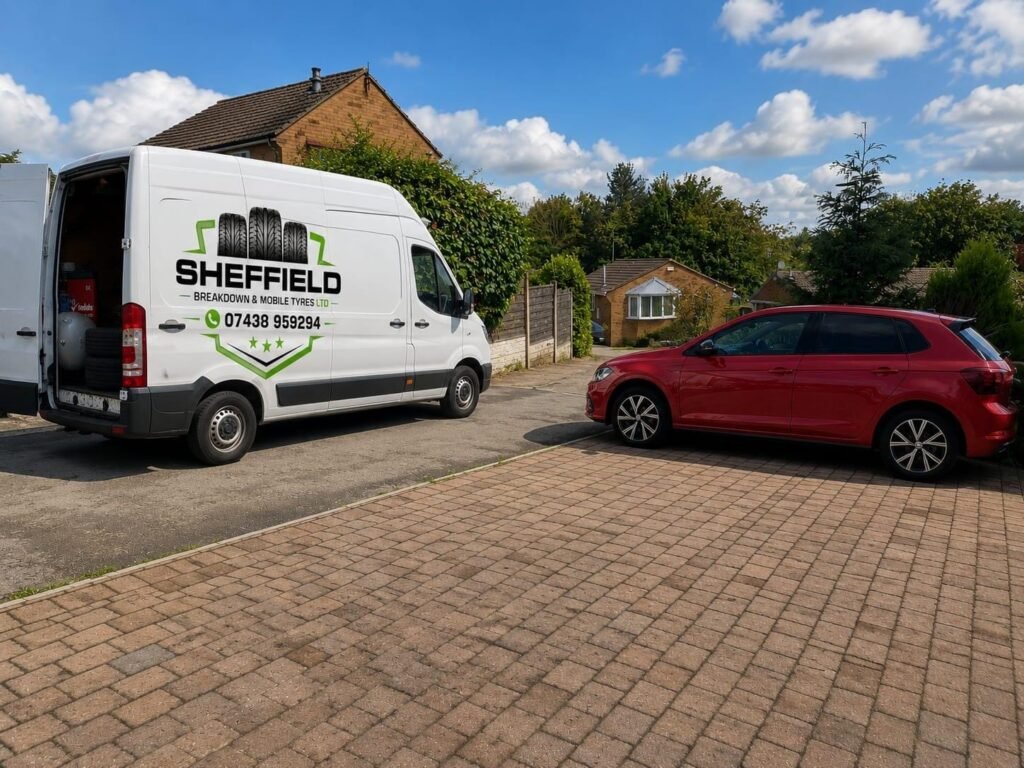
If you have noticed any of these warning signs and need immediate assistance, Sheffield Breakdown & Mobile Tyres LTD is here to help. We understand that tyre problems rarely happen at a convenient time, which is why we offer a rapid response, 24/7 emergency service across Sheffield and the surrounding areas within a 20-mile radius.
You don’t need to struggle with a jack on the side of a busy road or worry about getting your car to a garage. Our fully equipped mobile vans come directly to you—whether you are at home, at work, or stranded on the roadside.
We provide comprehensive services, including:
Don’t risk your safety on failing tyres. Call our emergency hotline today on 07438 959294 or contact us via WhatsApp for fast, professional, and reliable roadside assistance. We’ll get you back on the road safely in no time!